
About Genesis
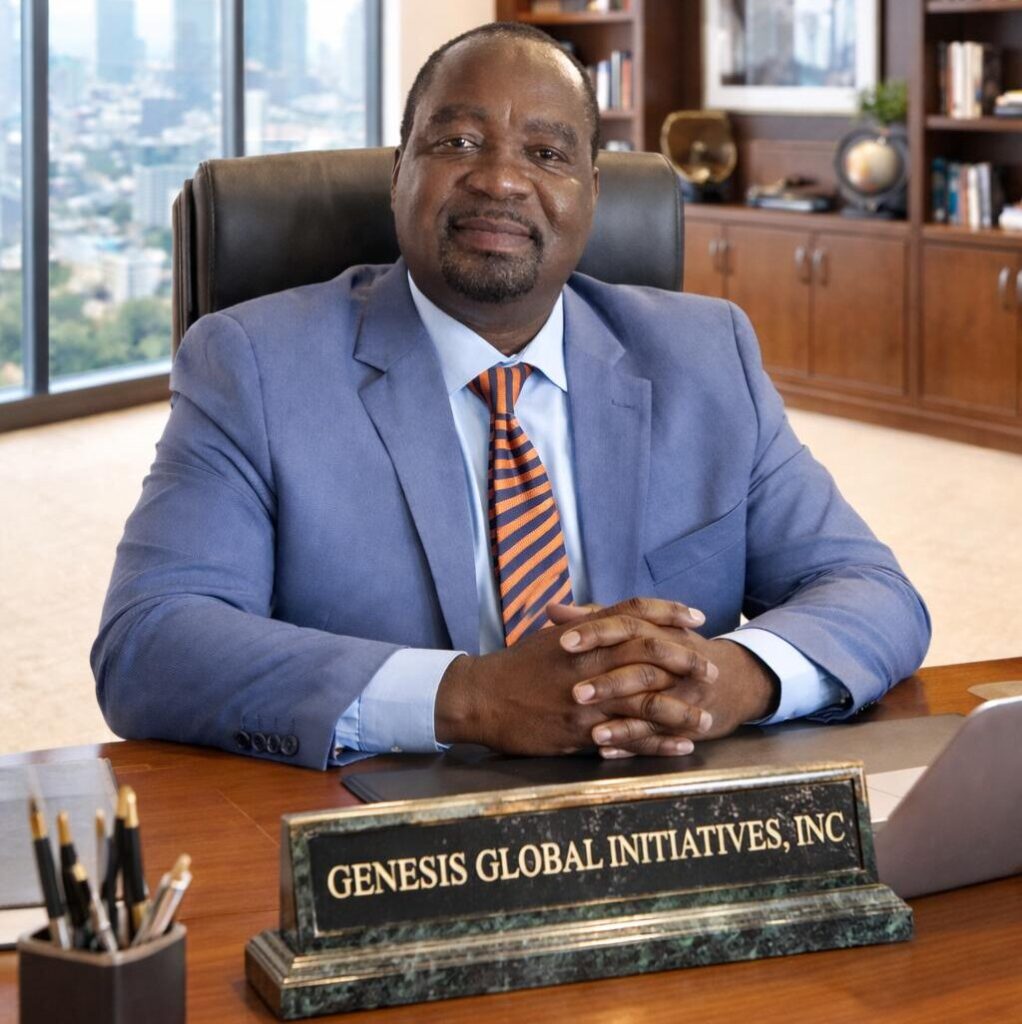
HIGH PERFORMANCE
WHO WE ARE
Genesis Global Initiatives, Inc. is a multi-sector development platform committed to advancing national progress through integrated systems that connect infrastructure, social services, education, enterprise, and economic opportunity.
Genesis was established on the principle that sustainable development requires more than isolated interventions. Lasting impact is achieved when physical infrastructure, human capital, and economic systems are developed together.
MISSION
To serve as a trusted development platform supporting governments, institutions, and communities in building sustainable systems for prosperity, empowerment, and national transformation.
VISION
To serve as a trusted development platform supporting governments, institutions, and communities in building sustainable systems for prosperity, empowerment, and national transformation.
CORE VALUES
- Integrity
- Accountability
- Service
- Innovation
- Partnership
- Empowerment
- Community Impact
DEVELOPMENT PHILOSOPHY
Genesis Global Initiatives operates on a simple principle:
Infrastructure development must be matched with workforce development, economic inclusion, and social stabilization if national growth is to be sustainable.

WHO IS FREDRICK SAMUEL GIBSON, SR.?
Fredrick Samuel Gibson, Sr., MSc, MA, MPA, MBA
Author • Criminologist • Policy Analyst • Rehabilitation & Recovery Specialist • Civic and Development Advocate
| “The books tell part of the story. Genesis represents the next chapter. And the legacy continues to be written.” |
The Occasion
On Sunday, November 22, 2026, in Philadelphia, an important chapter in a much longer journey will be celebrated: a multi-book presentation, the unveiling of Genesis Global Initiatives, and a celebration of scholarship, service, perseverance, and legacy.
The occasion is about more than books. It brings together decades of education, professional experience, community engagement, research, writing, entrepreneurship, public service, and a continuing commitment to Liberia, the Liberian diaspora, and the broader human condition.
Who Is Fredrick Samuel Gibson, Sr.?
Fredrick Samuel Gibson, Sr. is a Liberian-American criminologist, policy analyst, author, civic leader, rehabilitation and recovery specialist, business executive, and development advocate whose work bridges the United States and Liberia.
Originally from Gibson Town in the Tappita area of Lower Nimba County, Liberia, Gibson has built a multidisciplinary career spanning criminal justice and criminology, public administration, homeland security, business management, counseling and recovery services, transportation, broadcasting, entrepreneurship, and international development.
He has earned graduate qualifications represented by the credentials MSc, MA, MPA, and MBA, in addition to undergraduate and professional studies. He also previously attended law school but does not hold a Juris Doctor degree.
Gibson serves as President of the U.S.–Liberia Chamber of Commerce in Philadelphia and President and CEO of Genesis Global Initiatives (GGI). He has also served on Philadelphia’s Mayor’s Commission on African and Caribbean Affairs and previously served as National Chairman of Unity Party USA/Canada from 2010 to 2012.
His civic and professional activities have emphasized Liberia-diaspora relations, economic development, criminal-justice reform, policing, addiction treatment and recovery, youth empowerment, employment, institutional development, and the broader question of how knowledge, experience, and public policy can be transformed into practical responses to human and community challenges.
From Human Encounters to Scholarship
Gibson is the author of Behind the Wheel: Counseling on Wheels—Addiction, Recovery, and the Human Story, a rideshare ethnography drawing upon encounters and human stories accumulated through years behind the wheel.
The work reflects an unusual intersection of criminology, counseling, addiction and recovery, transportation, human behavior, and lived experience. Behind the wheel, ordinary rides became opportunities to listen—to stories of addiction, trauma, recovery, incarceration and reentry, family struggles, resilience, ambition, migration, relationships, and hope.
But those encounters did not end with Behind the Wheel. Meeting people from different cultures, professions, socioeconomic circumstances, nationalities, and personal backgrounds left an enduring imprint on Gibson and broadened the direction of his scholarship. Conversations that sometimes began during an ordinary trip opened windows into private dimensions of human experience that often remain invisible to the outside world.
Some involved suffering. Others involved broken relationships, abuse, addiction, displacement, loneliness, economic hardship, recovery, resilience, reconciliation, and the continuing search for hope. Collectively, these experiences encouraged Gibson to examine more deeply not simply what happens to people, but why it happens, how individuals and families experience it, how institutions respond, and what society can do differently.
Behind Closed Doors: Examining What Society Does Not Always See
That intellectual progression is reflected in the developing manuscript Behind Closed Doors, which extends the inquiry into the private world of intimate relationships.
The manuscript examines intimate partner and spousal abuse through questions of psychology, culture, migration, power, trauma, family expectations, silence, human dignity, and recovery. It reflects an awareness that some of society’s deepest human suffering occurs away from public view—inside homes and relationships where fear, control, isolation, cultural expectations, economic dependency, or silence may prevent people from seeking assistance.
Its broader purpose is not simply to describe abuse. It seeks to contribute to awareness and understanding while examining how families, communities, practitioners, institutions, policymakers, and society can strengthen prevention, accountability, safety, healing, dignity, and functional freedom.
Behind Closed Doors remains a manuscript under development and refinement, editorial review, and institutional review for potential publication.
The Architecture of Hope: What Happens After the Pain?
If Behind Closed Doors examines suffering that can remain hidden, The Architecture of Hope turns attention toward another fundamental human question: How do individuals, families, and communities rebuild?
The developing manuscript explores the role of hope when people confront adversity, trauma, disappointment, social instability, loss, or circumstances that may initially appear overwhelming.
Within that inquiry, hope is considered not merely as an emotion or an optimistic expression. It can also be examined through the structures that help human beings recover and move forward—relationships, family, community, education, opportunity, institutions, faith, service, personal responsibility, and purposeful action.
The Architecture of Hope likewise remains under development and refinement and subject to editorial and institutional review for potential publication.
A Scholarship Increasingly Centered on the Human Condition
Together with Behind the Wheel, these developing works illustrate an expanding dimension of Gibson’s scholarship. The writing increasingly moves between the individual and the institution: from the passenger sitting in a vehicle, to relationships inside the home, to communities confronting addiction, violence and social instability, and ultimately to larger questions involving policing, justice, governance, economic development, and social transformation.
His broader body of scholarship includes work on policing and police reform in Liberia, governance, economic development, drug policy, rehabilitation and reintegration, human security, criminology, and long-term national development planning. Several of these manuscripts and scholar editions remain works in development or various stages of editorial or institutional review rather than completed published books.
What connects these seemingly different subjects is a recurring concern with the human consequences of systems and social conditions. Whether examining addiction, policing, intimate partner violence, poverty, migration, recovery, governance, or national development, Gibson’s scholarship repeatedly returns to several fundamental questions: What are people experiencing? What conditions contributed to their experiences? What can society learn by listening to them? What responsibilities belong to individuals, families, communities and institutions? And what practical responses can society build?
The Scholar and the Practitioner
One defining feature of Gibson’s background is its combination of academic study and practitioner experience.
His professional history has included more than two decades in counseling and management-related work and approximately 26 years associated with broadcasting and journalism, alongside extensive experience in transportation and rideshare work.
His research interests include street culture and criminology, organized crime, gangs, transnational drug and human trafficking, policing, substance-use disorders, rehabilitation, reentry, intimate partner violence, human security, and the relationship between crime and socioeconomic conditions.
Those different experiences help explain the breadth of his writing. They connect the classroom with the street, policy with practice, scholarship with lived experience, and the Liberian diaspora with the continuing challenges and possibilities of Liberia itself.
From Scholarship to Genesis
Through Genesis Global Initiatives, Gibson has sought to carry this intellectual journey another step forward.
Genesis has developed around areas including employment, youth development, education, healthcare and recovery, modernization of Liberia’s informal economy, agriculture, restorative justice, community development, and expanding opportunities for ordinary people.
In this sense, Genesis represents an important evolution in the journey: an effort to move ideas beyond books, research papers, discussions, and diagnoses of social problems toward programs and institutions capable of producing measurable human and community outcomes.
The scholarship asks questions. The research examines problems. The books preserve experiences and ideas. Genesis seeks to translate knowledge into action.
What November 22 Represents
The November 22, 2026 gathering therefore represents more than a conventional book event. It brings together three interconnected dimensions of one journey: Scholarship. Service. Legacy.
The books and developing manuscripts represent years of education, observation, professional experience, human encounters, research, and writing. The unveiling of Genesis Global Initiatives represents an effort to translate accumulated knowledge and experience into service and institution-building. And the celebration of legacy provides an opportunity to reflect upon a journey that began in Liberia and continued through decades of life, education, professional work, family, community engagement, and service in the United States.
Yet November 22 is not intended simply as a retrospective celebration. It also raises a forward-looking question: What can still be built?
How can education, experience, relationships, research, scholarship, and service be used to create opportunities for others? How can the suffering encountered in people’s stories contribute to prevention? How can experiences with addiction contribute to recovery? How can encounters with abuse contribute to awareness and safer relationships? How can disappointment contribute to an architecture of hope? And how can scholarship ultimately contribute to stronger institutions and stronger communities?
The Continuing Answer
Fredrick Samuel Gibson, Sr. is a Liberian-American scholar-practitioner whose journey has crossed multiple professions and disciplines, but whose work increasingly converges around a common purpose: to understand human and institutional challenges, listen to the experiences of people who live through them, examine their causes through scholarship and professional practice, and contribute practical ideas toward recovery, dignity, stronger communities, and a better future.
On November 22, 2026, the books will tell part of that story.
Behind the Wheel tells part of the human story. Behind Closed Doors examines suffering that too often remains unseen. The Architecture of Hope asks how people and communities rebuild. Genesis Global Initiatives represents an effort to move from understanding problems toward building responses.
And the legacy continues to be written.